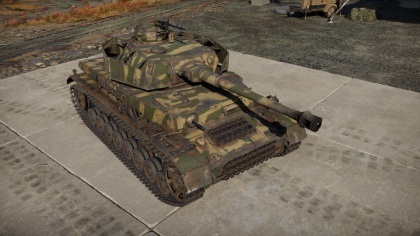
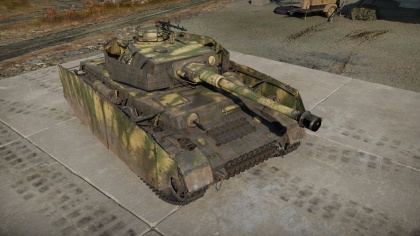
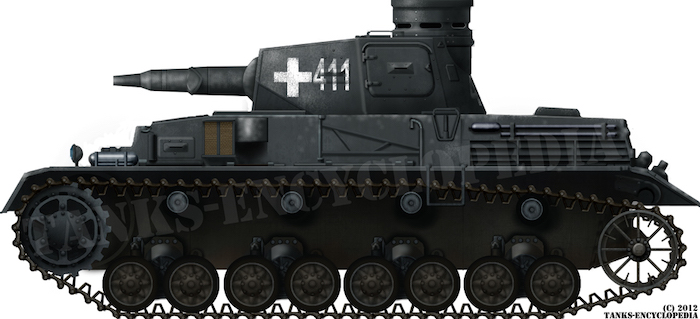
Hull roof and floor.
Panzer4 turret roof armor thickness.
10 mm 0 39 in.
The last 68 ausf.
Preference given to data from jentz.
The hull s armor was largely the same as the ausf g with the differences lying on the hull s roof.
When sloped it reduces the penetrating power of bullets and solid shot as after penetrating each plate projectiles tend to tumble deflect deform or disintegrate.
G were produced without the added 30 mm.
The frontal turret armor plate thickness consisted of 120mm at 20 degrees 60mm on the sides and rear at 25 degrees 40mm flat on the roof and 150mm of cast armor on the saukopf english.
The thickness of the front plates on the turret and the weapon mantlet was 50 mm and this thickness was not increased in future upgrades.
J were produced without face hardened armor and the superstructure roof was thickened to 16 mm.
Having more armour might help but adding proper safety features to cope with a catastrophic hit would probably be a better strategy.
The maximum thickness holed at jutland was 9 inches.
10 mm 0 39 in schürzen.
5 mm 0 20 in to 8 mm 0 31 in turret front.
Armor on the lower hull front.
Test of 26 66cm class a main armament turret face port plate originally for ijn shinano the third japanese yamato class super battleship converted into an aircraft carrier instead and sunk on its way to final fitting out yard by a u s.
The engine compartment design and armor were unchanged with 20 mm all around and 10 mm of top armor.
Spaced armor that is not sloped is generally designed to provide protection from explosive.
The commander s cupola had all around 14 5 mm of armor with the two hatch doors being 8 mm thick.
The front turret armor was 16 mm at a 10 angle while the sides and rear were 14 5 mm at 25 angle and the top was 10 mm at 83 90 angle.
D were produced with 50 mm.
Pig s head style mantlet.
The side armor was 30 mm the rear 20 mm and the bottom was 10 mm.
The upper superstructure frontal armor was 80 mm at a 50 angle the sides were 40 mm at a 19 angle the rear armor was 30 mm and the top was 20 mm.
30 mm 1 2 in turret roof.
Improving the machines protective armor during production was a slow process and by november only about half of the tanks included the reinforced armor.
Depending on the source the front armor thickness of the turret varies between 15 to 20 mm.
Armor with two or more plates spaced a distance apart falls under the category of spaced armour spaced armour can be sloped or unsloped.