Cut pieces of foil insulation tape seal up the.
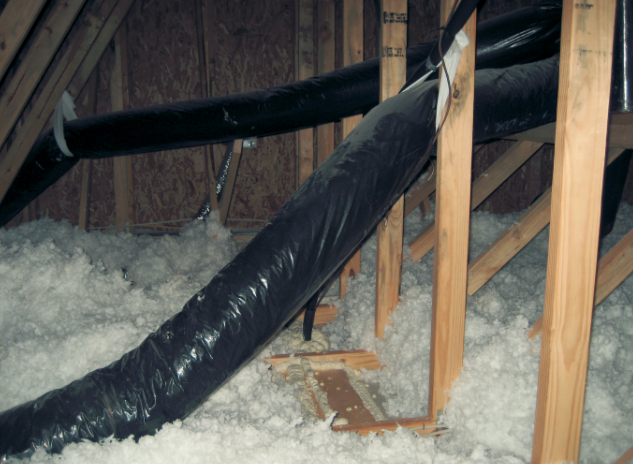
Outer plastic wrap of attic air ducts.
Applying spray foam insulation to the outside of the duct.
Pull the insulation and outer liner of the flex duct up over the collar.
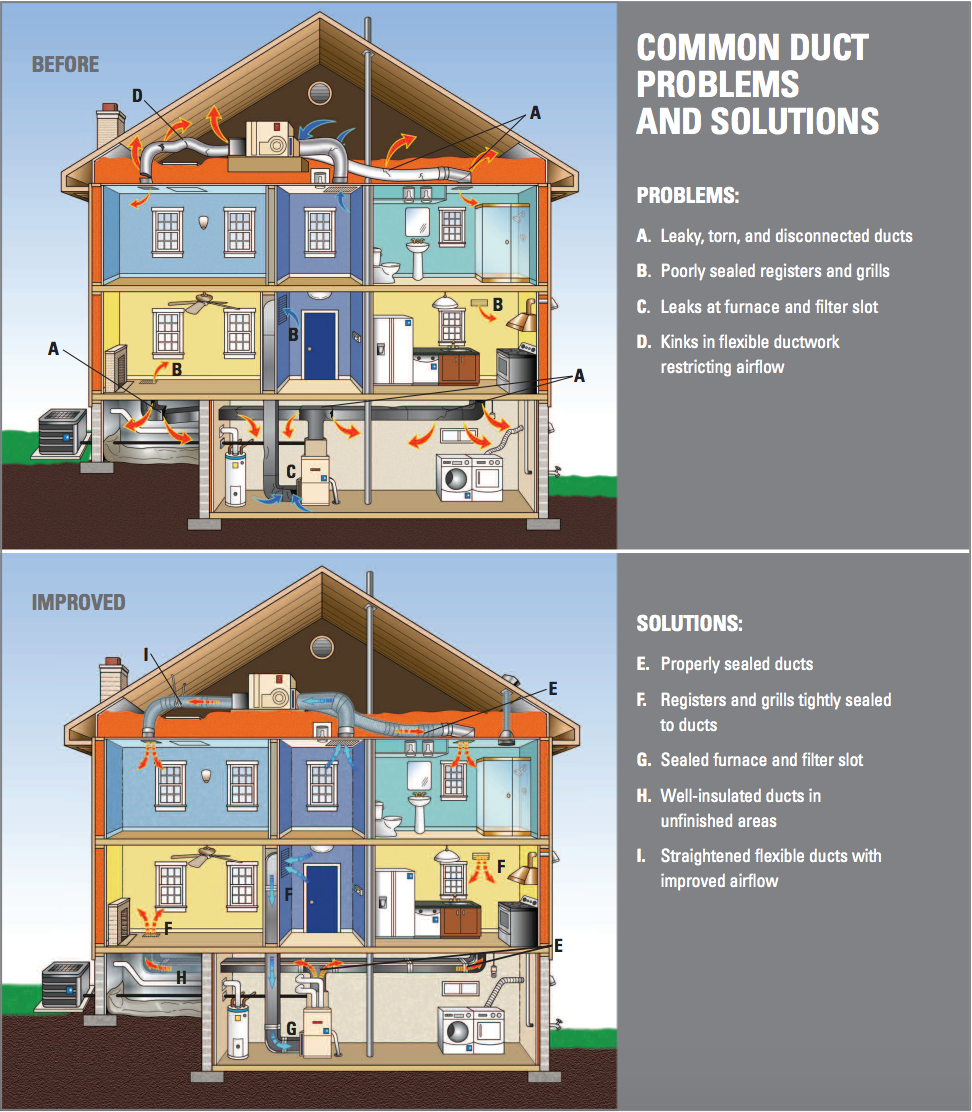
No air should be able to penetrate the ductwork and the joints are a natural weak point.
The shiny vapor barrier will protect the ductwork from sweating as long as it s exposed to the surrounding air.
Does ductwork go bad.
The two most common ways to insulate ductwork are.
In hot attic spaces or where exposed to uv light the plastic of this flexible air conditioning duct material disintegrates leaving its fiberglass insulation exposed to also disintegrate leak or possibly blow into the building living space.
The reason ductwork is exposed is because.
Replacement of the duct work is required a significant expense.
Wrapping the duct in a foil faced blanket.
Today s flexible ductwork is covered with a shiny metallic cover this is its vapor barrier.
Often pricing per duct run ranges between 150 and 250 from air duct professionals mack explains that a typical single family home may need 6 10 duct runs.
Reposition the foil outer insulation to cover the hole as much as possible.
Ductwork has a maximum lifespan of 20 25 years.
Duct wrap insulation reduces heat loss or gain through duct walls conserving energy.
Pull the outer liner of the duct up to the outer liner of the trunk line or fitting.
Ed mack of air duct professionals in lake elsinore california creates estimates based on the number of ducts to be installed.
The ductwork should be installed so that it is in direct contact with the ceiling and or truss lower cords.
Make sure the flex duct insulation comes in full contact with the insulation on the trunk line or fitting such as a duct boot that it is being attached to.
If the ducts must be located within a vented attic one option for protecting the ducts and helping to minimize heat transfer between ducts and the unconditioned attic is to lay the ducts on the attic floor and cover them with the same blown insulation that is used to cover the attic floor.
Fibrous glass duct wrap insulation is designed for application to the exteriors of commercial and residential sheet metal heating ventilating and air conditioning ducts and plenums operating at temperatures between 40 f 4 c and 250 f 121 c.
Also make sure to use hvac tape and seal all of the joints between duct segments.
Some of the foil may be missing but the foil tape will cover the defect.
Let s say you re thinking about installing a new furnace air conditioning system.
The insulation you use to wrap your ducts should leave no gaps and be at least two inches thick to work effectively at reducing or eliminating condensation on ductwork.
If you need help deciding which type of insulation you need set up an energy consultation.