Osha regulations for commercial roof inspections.
Osha standard roof pitch.
Steep roof above 4 12 slope 29 cfr 1926 501 b 11.
Your work could fall into any one of the three provisions.
Know the pitch of the roof and follow the appropriate standard.
The occupational safety and health administration has set new guidelines for inspecting commercial roofs.
If you choose to walk on a roof without these you will be out of compliance with osha regulations and subject to fines.
These include using roof anchors and safety cords for roof inspections.
A common range is given from 1 12 to 4 12 whereas conventional dimensions vary from 4 12 to 9 12 but the steep roofing technique follows slope above 9 12 with additional fasteners.
Aerial lifts may be used to transport personnel so long as the requirements in 29 cfr 1926 453 which cover aerial lifts are met.
The typical roof slope follows specific materials and design techniques to ensure perfect safety from leakage.
Each employee who is constructing a leading edge 6 feet 1 8 m or more above lower levels shall be protected from falling by guardrail systems safety net systems or personal fall arrest systems.
Are installed at a slope of 50 to 70 degrees from the horizontal.
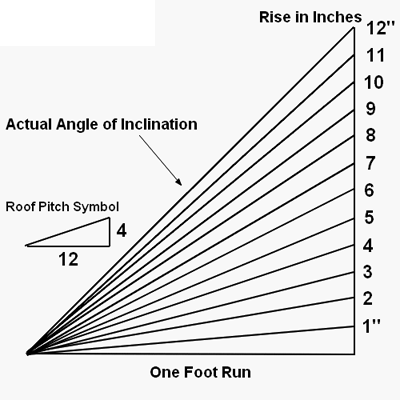
Roof slope osha defines a low slope roof as a roof having a slope of less than or equal to 4 inches of vertical rise for every 12 inches horizontal length 4 12 1926 500 b definitions.
Which of the three roofing provisions apply to me.
This is important because the osha definition is used as a basis for implementing low slope fall protection measures such as warning.
Low slope roof 4 12 slope or less 29 cfr 1926 501 b 10.
The requirements of b 10 apply if tile work is on a low slope roof slope less than 4 in 12.
29 cfr 1926 500 defines low slope roof as a roof having a slope less than or equal to 4 in 12 vertical to horizontal 29 cfr 1926 501 b 10 allows the use of a safety monitor on a low slope roof.
The requirements of b 11 apply if the work is on a steep roof slope greater than 4 in 12.